PCHC synthesis
Recorded in the group's laboratory at the Department of Chemistry, IIT Madras. Carbon dioxide, an abundant and non-toxic C1 feedstock, becomes the backbone of an aliphatic polycarbonate.
 Chakraborty GroupIIT Madras
Join us
Department of Chemistry · IIT Madras
We design organometallic and metal-free catalysts that convert cyclic esters, epoxides and captured CO₂ into biodegradable, recyclable polymers — and we train the chemists who will scale them.
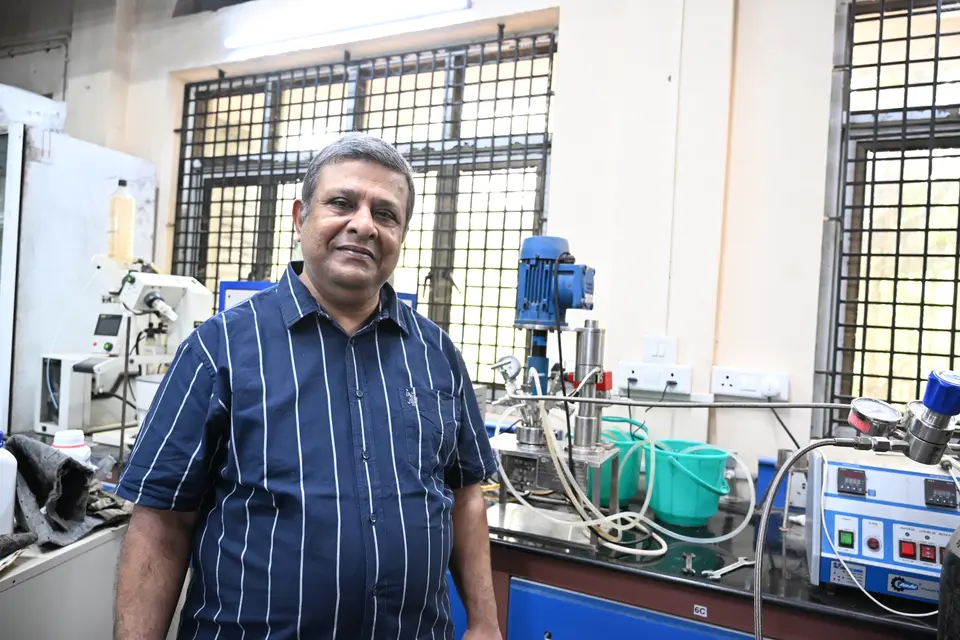
Principal Investigator
Professor Debashis Chakraborty was awarded Dr.rer.nat. from the University of Göttingen in 2000 under the mentorship of Professor Dr. Dr. h.c.mult. Herbert W. Roesky. He pursued his initial postdoctoral career at the University of Idaho in the area of Fluorine Chemistry. After about a year he moved over as a joint postdoctoral researcher between Colorado State University and the Dow Chemical Company. He returned to India in 2003 and worked as a corporate research Group Leader in two prime pharmaceutical companies before joining as a faculty in the Department of Chemistry at Indian Institute of Technology Madras in 2005. The Organometallics and Polymer Chemistry group is headed by him. The major research focus of this group lies in the areas of organometallics for polymer synthesis, homogeneous catalysis, CO₂ sequestration, wealth from waste and water activation.
AFIChemE · FIAAM · FSFRC · FICS · MIScT · CSci
The problem we work on
Petroleum-derived plastics persist for centuries and carbon dioxide accumulates in the atmosphere. Our group treats both as a single catalysis problem: build the metal center and ligand environment precisely enough, and waste streams become feedstocks.
Transition-metal organometallics and simple metal salts as catalysts for the ROP of cyclic esters and lactides, resolving how ancillary ligands on the metal center govern polymerization behavior and tacticity.
Read more → 02Phosphorus(V) compounds as metal-free initiators for cyclic ester and lactide polymerization — removing metal residues from biomedical-grade polyesters.
Read more → 03Ring-opening copolymerization of epoxides with CO₂ and with cyclic anhydrides, converting a waste greenhouse gas into aliphatic polycarbonates.
Read more → 04Design and synthesis of new non-metallocene pre-catalysts for olefin polymerization, extending control over polymer architecture.
Read more → 05L/D-lactide recovered from bio-derived lactic acid sourced from food waste, closing the loop between waste streams and biodegradable plastics.
Read more → 06Polyester carriers and biogenic metal nanoparticles developed for drug delivery, in collaboration with biotechnology groups.
Read more →Inside the laboratory
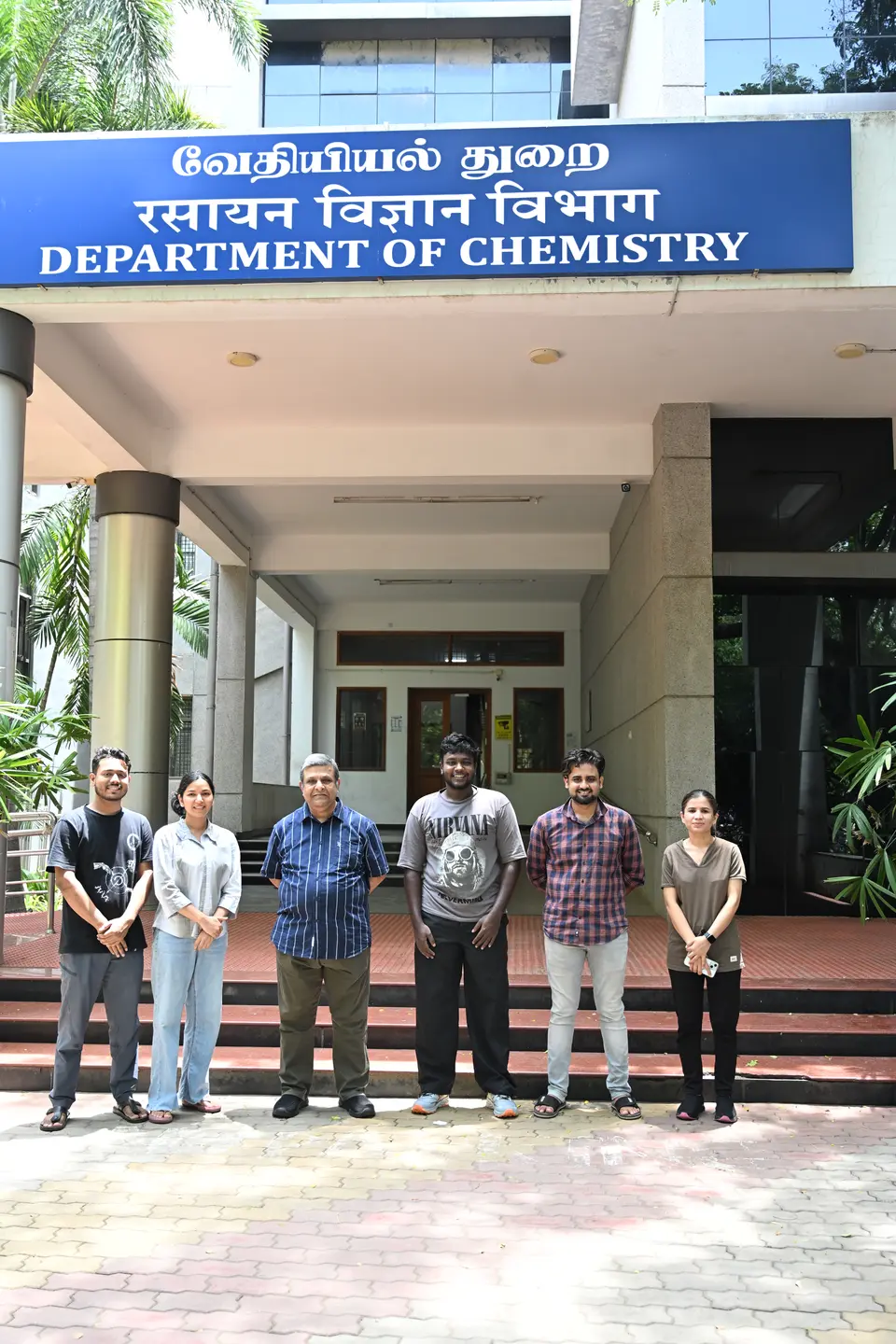
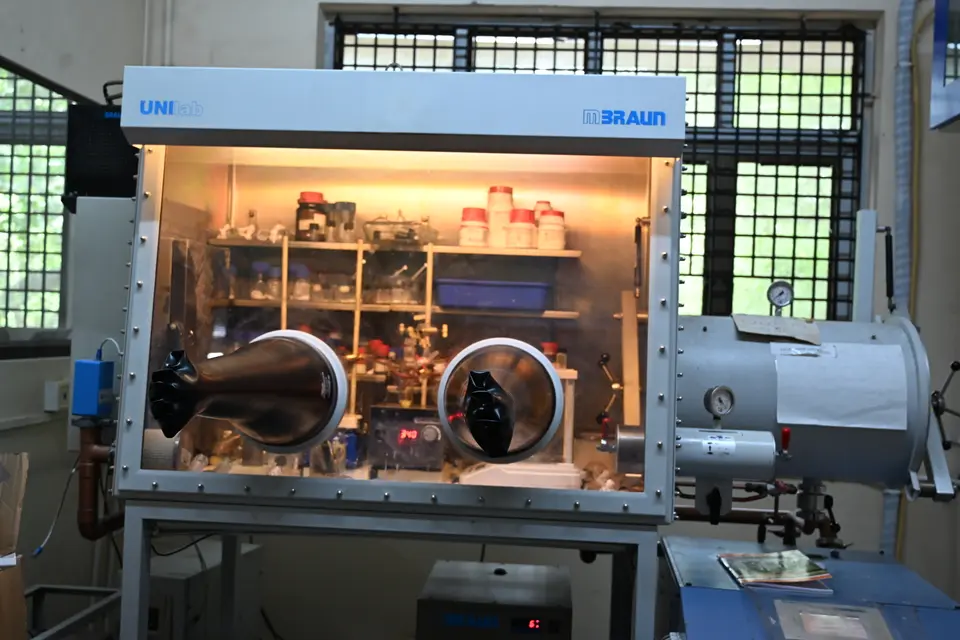
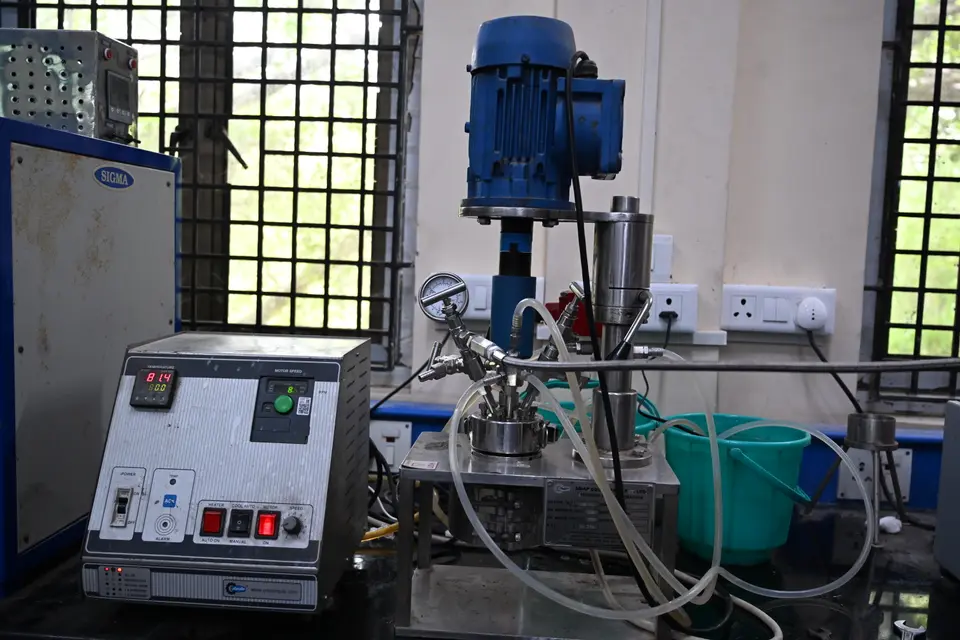
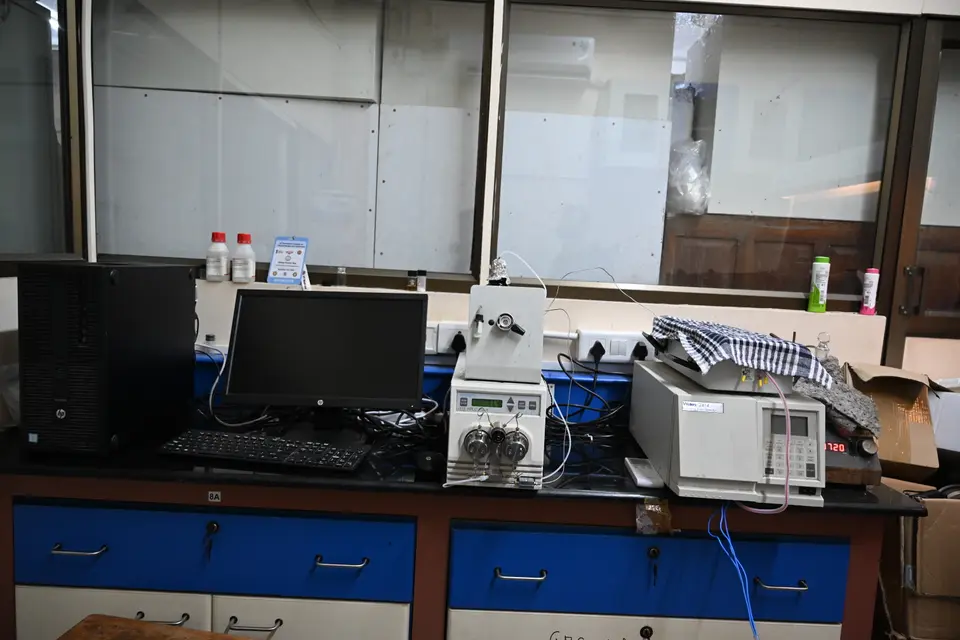
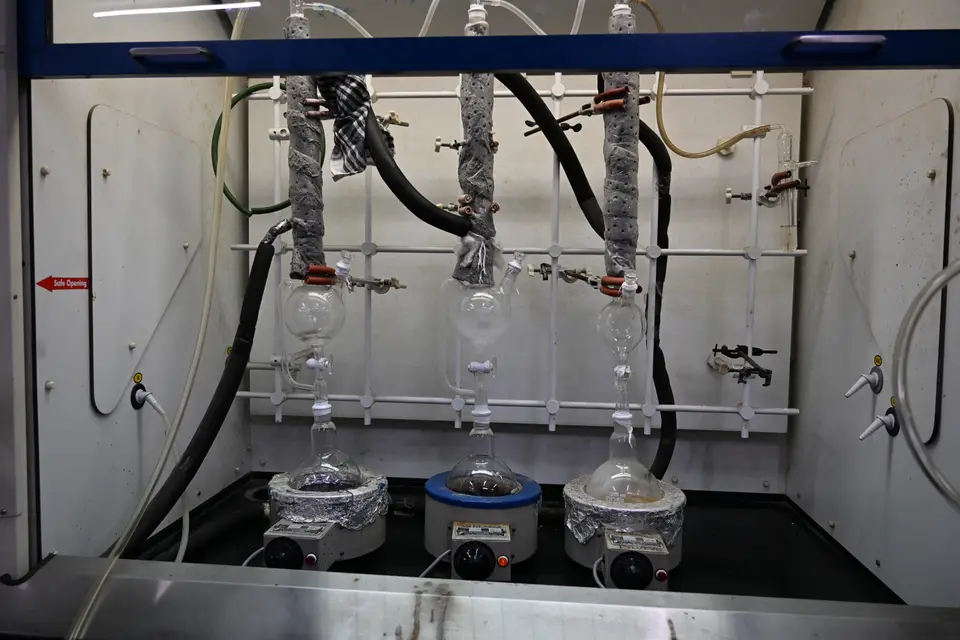
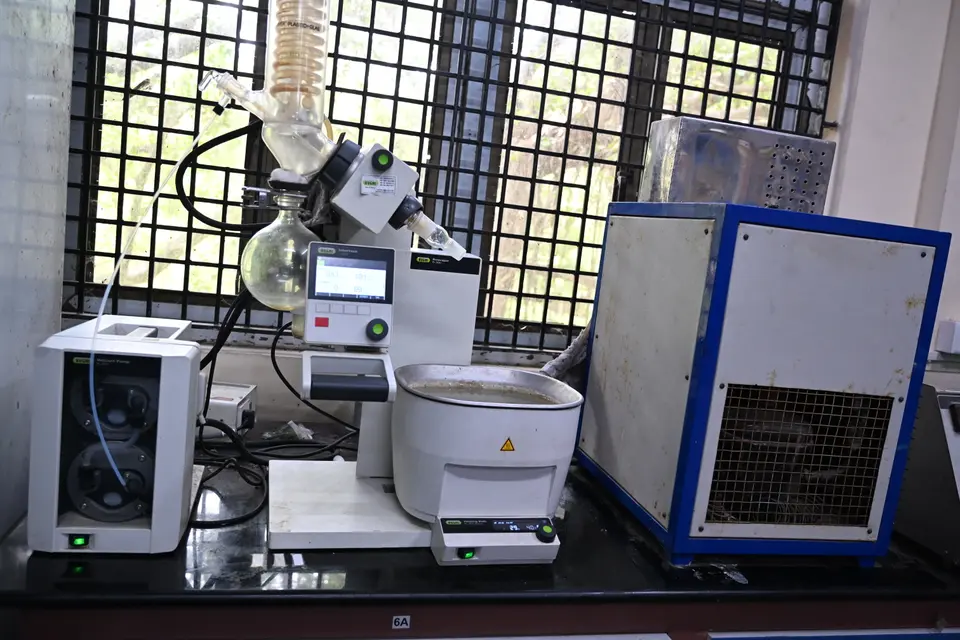
Air-sensitive organometallic synthesis, polymerization kinetics and full structural characterization, carried out in the Department of Chemistry at IIT Madras.
From the bench
Poly(cyclohexene carbonate) forming by the ring-opening copolymerization of cyclohexene oxide with carbon dioxide — the reaction at the center of our CO₂ utilization work.
Recorded in the group's laboratory at the Department of Chemistry, IIT Madras. Carbon dioxide, an abundant and non-toxic C1 feedstock, becomes the backbone of an aliphatic polycarbonate.
Recent work
Ruthenium based organometallic catalysts for CO₂ hydrogenation: a decade update
Inorg. Chim.Acta 2026, 597, 123154.
Chiral Proline-derived Zn(II) Complexes as Catalysts for Ring-Opening Polymerization and Ring-Opening Copolymerization Reactions
Polym. Chem. 2026, 17, 758-769.
Efficient and Controlled Ring-Opening Copolymerization of Cyclohexene Oxide with Cyclic Anhydrides Catalyzed by Proline-based Chiral Alkyl Al(III) Compounds
Faraday Discuss, 2026, 262, 191–211.
Salen Derivatives of Zr(IV) as Efficient Catalysts for the Ring-Opening Copolymerization of Epoxides with Anhydrides
Eur. J. Inorg Chem. 2026, 0, e202500510.
In the press
We take doctoral and master's students with a background in inorganic, organometallic or polymer chemistry, and welcome collaboration on catalysis for sustainable materials.